What to Say to Someone Who Lost a Pet: A Heartfelt Guide for Friends and Family
Why Words Feel Impossible When a Friend Loses Their Pet
When someone we love loses a pet, our first instinct is to reach for words of comfort — but those words often feel small against the size of their grief. A pet is a member of the family, a daily companion, a quiet witness to ordinary mornings and hard days. Their absence leaves an empty corner of the home and changes the shape of every routine.
The good news: you don't need to be a grief counselor or get every word perfect. What grieving pet parents remember most isn't the polish of language — it's that someone showed up. We at Furfond have spent years making handcrafted keepsakes for families navigating exactly this kind of loss, and through those conversations we've learned what truly comforts and what unintentionally hurts. Here's a heartfelt, practical guide to what to say to someone who lost a pet — plus what to avoid, and how a thoughtful gesture can speak when words aren't enough.
Why "I'm Sorry for Your Loss" Sometimes Isn't Enough
The phrase "I'm sorry for your loss" is well-intentioned, and it's certainly better than silence — but to a grieving pet parent, it can feel scripted, the way a stranger might say it at a funeral. What heartbroken pet owners often need is something more specific, more personal, more proof that you understood who their pet was.
Consider the difference between "I'm sorry for your loss" and "I keep thinking about how Charlie always greeted me at the door — he had the best personality." The second sentence shows that you saw the pet, that you remember them, that they mattered to you too.
This is the secret of meaningful condolence: name the pet, recall a memory, and acknowledge that this is real grief — not a small thing to be brushed aside.
10 Heartfelt Things to Say to Someone Who Lost a Pet
Each of these is a starting point. Adapt them to your relationship and to the pet's specific personality and story.
- "I'm so sorry. [Pet's name] was such a special soul." — Naming the pet signals you saw them as an individual, not just "a dog" or "a cat."
- "I'll always remember the way [Pet's name] used to [specific behavior]." — A memory shows you knew this animal as a personality, not a generic pet.
- "There are no rules for grieving a pet. Take all the time you need." — Gives permission that society often doesn't.
- "I know how much [Pet's name] meant to you. This is a real, deep loss." — Validates the size of their grief.
- "You gave [Pet's name] such a wonderful life." — Reframes their identity from "person who lost a pet" to "person who loved well."
- "I'm here whenever you want to talk about [Pet's name] — or whenever you don't." — Offers presence without pressure.
- "I brought you dinner because I couldn't think of the right words, but I wanted you to know I'm thinking of you." — Sometimes honesty about your own helplessness is more comforting than perfect phrasing.
- "Would you tell me your favorite story about [Pet's name]?" — Invites them to remember out loud, which most grieving pet parents desperately want and rarely get the chance to do.
- "It makes complete sense that you're heartbroken. They were family." — Counters the cultural message that pet loss is somehow "less than" human loss.
- "I love you. I'm not going anywhere." — Sometimes the grief is bigger than any single phrase, and what your friend needs most is to know you are steady beside them.
What NOT to Say (Common Phrases That Hurt Even When Well-Meant)
Some phrases sound supportive but land wrong. Even close family members get these wrong, often because they've heard them used at human funerals and don't realize how they translate to pet loss.
- "At least it was just a pet." — Minimizes the loss. There is no "just" here.
- "You can always get another one." — Pets aren't replaceable, and this implies the bond was generic.
- "They're in a better place now." — For a grieving owner, the better place is right beside them.
- "Aren't you over it yet?" — Said weeks or months later, this can feel devastating. There is no fixed timeline for grief.
- "Maybe it was for the best." — Projects rationalization onto someone who isn't ready for it, especially if a difficult euthanasia decision was involved.
- Saying nothing because you're afraid to say the wrong thing. — Silence often reads as indifference. A clumsy, sincere attempt is almost always better than no attempt at all.
When Words Aren't Enough: How a Thoughtful Gesture Speaks Volumes
Sometimes language genuinely runs out. If you're struggling to find words, a small, sincere gesture can communicate what your sentences can't.
A grieving friend doesn't need a grand display — they need a gentle, ongoing reminder that their pet was loved by more people than just themselves. A meaningful keepsake — something personal, handcrafted, made specifically for their pet — can become an anchor that holds long after the casseroles stop arriving and the texts taper off.
This is why so many of our customers reach out asking for pet memorial gifts for a friend who recently lost their pet. They've already said the words; now they want to give something that will outlast the words.
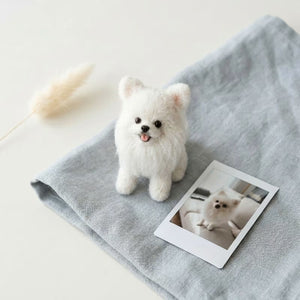
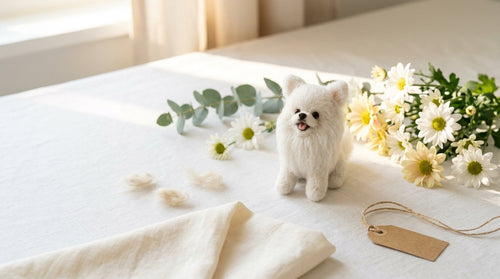
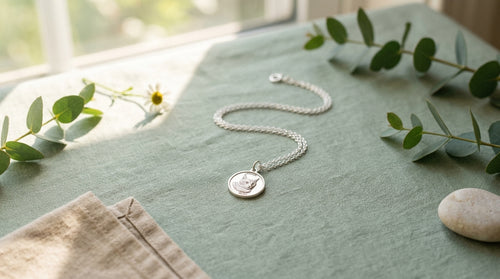
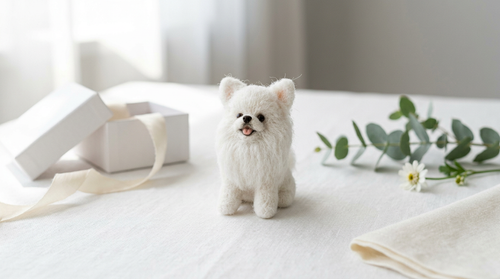
A delicate, hand-engraved custom pet necklace in sterling silver lets a friend carry their pet close to their heart — quietly, every day. A lovingly crafted custom pet portrait frame, needle-felted from wool entirely by hand, gives their pet a beautiful, permanent place in the home where they still belong. These aren't replacements for words — they are extensions of them. The keepsake says, on every quiet morning afterward, "your pet mattered, and so do you."
If you're not sure what to give, our team is genuinely happy to help — we've spent years guiding people through this exact decision.
How to Support Long After the First Week
The hardest part of pet grief usually isn't the first 48 hours. It's the third week, the third month, the first holiday, the first anniversary. By then, most people in the grieving owner's life have quietly moved on. Your friend hasn't, and they often feel terrible for not having moved on either.
Some of the most powerful things you can do:
- Mark the dates. A short text on the one-month or one-year anniversary — "Thinking of you and [Pet's name] today" — can be life-saving. Most people forget; you'll be the one who didn't.
- Mention the pet by name, casually, months later. "Remember how [Pet's name] used to do that thing?" reminds your friend that someone else still remembers too.
- Don't avoid the topic. If your friend brings up their pet, lean in. Most people change the subject because they're uncomfortable, and grieving pet parents notice every single time.
- Offer specific help, not vague offers. "Want me to come over Thursday at 6 with takeout?" beats "Let me know if you need anything," which most exhausted grievers are too tired to take you up on.
Frequently Asked Questions
Is it appropriate to send flowers when someone loses a pet?
Yes — many people do, and it's a kind, traditional gesture. A small bouquet with a handwritten note works beautifully. If you'd like something that lasts longer than cut flowers, a potted plant or a custom keepsake is a meaningful alternative.
How soon after a pet's death should I reach out?
As soon as you find out. A short, sincere message in the first 24–48 hours is enormously meaningful. Don't worry about being "first" or "saying the right thing" — what grieving pet parents notice is whether you reached out at all.
What if I didn't know the pet personally?
Try: "I didn't get to meet [Pet's name], but I know how much they meant to you, and I'm so sorry." This is honest and kind, and acknowledges the relationship without pretending to know things you don't.
Should I bring up the pet weeks later, or will it make my friend sad?
Bring them up. Grieving pet parents often feel forgotten because everyone else has moved on. Saying the pet's name out loud, even months later, is almost always welcomed.
What's a meaningful gift for someone who lost a pet?
A handcrafted, personalized memorial keepsake is one of the most lasting gestures you can offer. A custom pet necklace, a custom pet portrait frame, or another piece from our pet memorial gifts collection gives them something tangible to hold onto long after the initial wave of condolences has passed.
How do I support someone through pet grief from far away?
Send a thoughtful message as soon as you hear. A few days later, send a small care package — a handwritten card, a meaningful keepsake, a comforting tea or candle. Distance doesn't have to mean absence.
What if my friend feels guilty for grieving "too much" over a pet?
Reassure them gently. Pet grief is real grief, and the bond between a person and an animal is one of the purest forms of love. Tell them: "There's no such thing as grieving 'too much' for someone you loved." It often unlocks an enormous wave of relief.
You Don't Have to Find Perfect Words
If you've read this far, you're already doing the hardest part: showing up for someone you love during a real and heartbreaking loss. You don't need to be eloquent or "fix" anything — you just need to be present, steady, and willing to say their pet's name out loud.
When your words feel like they aren't enough, a small, lovingly handcrafted keepsake can carry them forward. We at Furfond create each piece by hand, with care and intention, because we know what these objects come to mean for the people who hold them. If a friend is grieving, browse our pet memorial gifts collection, or simply reach out — we're always glad to talk through what feels right for the person you're trying to comfort.