Leather vs. Acrylic vs. Metal Pet Keychains: Which One Actually Lasts?
Here’s an honest question we get from customers every week: "Why does your leather keychain cost $229 when I can get an acrylic one on Etsy for $14?" It’s a fair question, and the real answer isn’t marketing spin — it’s material science and labor. This article breaks down the three main material categories for custom pet keychains and compares them on the only metric that actually matters for a small object you’ll carry every day for years: how it holds up over time.
Short version for the impatient: leather wins for daily-carry memorial keepsakes, metal wins for name-tag style simplicity, acrylic is best only if you need something cheap and don’t mind replacing it. The long version is below.
The three material categories, precisely defined
Acrylic (and resin printed)
Cast or extruded acrylic sheet, 2–5 mm thick, printed on one or both sides with your pet’s photo using UV or dye-sublimation printing, then laser-cut to shape. Sometimes "resin" is marketed as a premium variant — it’s the same category in real-world durability. Price: $8–$30.
Metal
A broad category. Laser-engraved aluminum or steel tags ($15–$40), UV-printed metal plaques ($20–$35), stamped brass or copper ($30–$80), sterling silver engraved ($60–$150), and cast bronze or pewter portraits ($120–$300). The durability varies enormously within this category, so we’ll treat the subtypes separately below.
Leather
Also a category. The distinction that matters most: full-grain vegetable-tanned leather (what Furfond uses, and what high-end leather-workers use) versus bonded / PU / chrome-tanned faux leather (what most sub-$50 Etsy listings use). The durability gap between these two is roughly the durability gap between solid wood and particle board.

How each material actually wears
Acrylic: 6 to 24 months of looking good
UV-printed acrylic starts fading the day you take it out of the package. Indoor use and pocket-carry extend the life. Outdoor hanging (on a car key in sunlight) shortens it dramatically. The print is sealed under a thin top coat that’s scratch-vulnerable; after 6 months of keychain-on-keys friction, you’ll usually see visible scratches on the face.
Most acrylic keychains become "well, you can still kind of tell what it is" after 18 months and "faded blob" after 3 years. Replacement cycle: 2–3 years if you care how it looks.
UV-printed metal: 1 to 3 years
Slightly better than printed acrylic because metal resists cracking and impact, but the print-layer is the same story. Fading on outdoor or sunlight-exposed carry is inevitable. The base metal lasts forever; the print doesn’t.
Laser-engraved metal tag: 10+ years, but without portrait detail
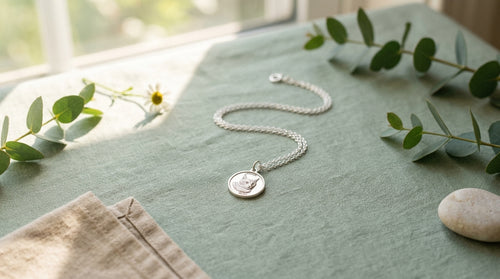
This is a totally different proposition from the printed options. A laser-engraved tag has no ink, no print layer, nothing that can fade — the design is cut into the metal itself. Aluminum, stainless steel, brass, and silver all hold engraving indefinitely. The trade-off: you can’t reproduce a photo-realistic portrait by engraving. You get a silhouette, an outline, a name, maybe a stylized line-art version of your pet. Not the specific face.
For someone who wants a permanent, no-maintenance, daily-carry memorial, an engraved silver tag with their pet’s name and silhouette is a perfectly good answer. It’s just a different aesthetic from a portrait.
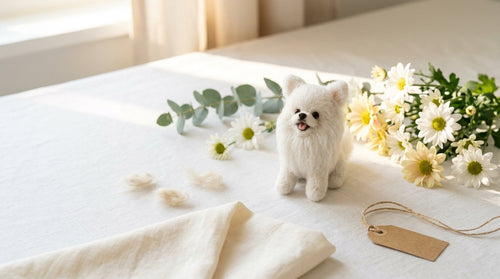
Cast metal 3D miniature: generations
A cast bronze, pewter, or silver sculpture of your pet is functionally permanent. Bronze outdoor statues have lasted for thousands of years; a cast pewter keychain will outlast you. The surface will develop a patina (gently darkening or greening) which most people consider a feature, not a flaw. The main drawback: weight. A cast metal miniature at the size needed for keychain use ends up 30–80 grams. On a keyring with 5 other keys and a fob, that’s noticeable.
Printed or PU leather: months, not years
When you see a "leather pet portrait keychain" for $35 on Etsy, it’s almost always either PU leather (plastic imitation) with a printed image, or chrome-tanned split leather with a printed image. Both start cracking along flex points within 6–12 months of daily carry. The print fades on roughly the same timeline as acrylic printing (6–24 months). So you’re looking at a piece that looks rough after one year and is genuinely unusable after two.
Full-grain vegetable-tanned leather: decades with patina
Full-grain vegetable-tanned leather is the same material used by old-school saddle makers, boot makers, and museum conservators. Treated well, it softens and darkens over 5–10 years into a patina that most people find more beautiful than the original. Treated badly (soaked, left in the sun for months, rubbed with solvents) it still usually survives; it just looks more "lived in" than it should.
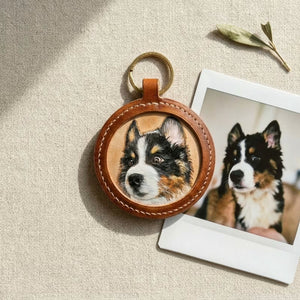
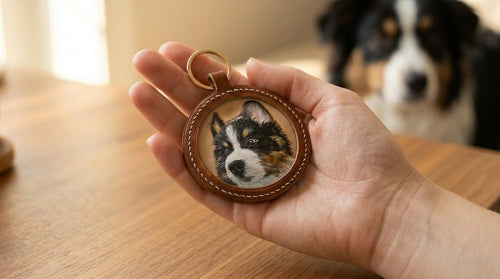
Hand-carved and hand-painted full-grain leather keychains — the category Furfond works in — will last 10+ years with casual care. The leather lasts even longer; what eventually goes is the paint layer, which wears slowly under pocket friction over 5–8 years. At that point you can have it refinished, or simply live with the weathered look (which, for a memorial keychain, many people prefer).

The 10-year cost comparison (honestly)
Rather than quoting initial prices, let’s compare what you’ll spend over a decade, assuming you want to keep a reasonably good-looking keychain the whole time.
- Printed acrylic at $15, replaced every 2.5 years: 4 replacements × $15 = $60 total. And you throw 4 faded plastic objects into landfill.
- UV-printed metal at $25, replaced every 3 years: 3.3 replacements × $25 = $82 total.
- Laser-engraved silver tag at $80, replaced never: $80 total. No portrait, though.
- PU leather printed at $35, replaced every 1.5 years: 6.7 replacements × $35 = $234 total. Worst of both worlds.
- Full-grain leather hand-carved at $229, optional refinish at year 8 for $40: $269 total over a decade. Same object the whole time, weathered in a good way.
- Cast bronze sculpture at $250, replaced never: $250 total. Heavy on keys.
The bottom tier in this comparison isn’t the cheapest — it’s PU leather. You spend more than the real leather option over 10 years, have to repeatedly discard pieces that have sentimental memories attached, and never end up with anything heirloom-grade.
The cheapest honest-longterm option is the laser-engraved silver tag, if you can live without a portrait. The best-value option for a portrait keychain is full-grain leather, if you’re willing to spend up front.
Which material for which purpose?
For a living pet, fun carry, under 3 years of intended use
Printed acrylic is fine. Don’t overthink it. It’ll fade eventually, by which point a lot of things will have changed anyway.
For a memorial keepsake
Leather (full-grain) or cast metal. The permanence is part of the meaning — a memorial that fades away in 18 months works against its own purpose.
For a daily-carry piece you want to become "yours"
Leather. It’s the only material on this list that genuinely improves with age; everything else either stays the same or degrades. A full-grain leather keychain at year 5 looks measurably better than at year 1, which is almost unique among consumer objects.
For gifts where you don’t know what the recipient will prefer
Full-grain leather in natural tan is the most universally appropriate. It reads as "handmade" rather than "mass-produced," it suits both living and memorial uses, and the natural color works across every aesthetic.
For someone who loses keychains
Honestly? Acrylic. If the keychain is going to get lost or left at a beach house anyway, don’t spend $229 on it. Save the money for one that’ll stay put.
Care: the honest minimum
Acrylic
No care needed. You can’t extend its life meaningfully. Just replace it when the print goes.
Metal (engraved)
Wipe occasionally. Sterling silver can be polished with a silver cloth if it tarnishes. Brass will develop a warm patina that most people like.
Metal (printed)
Keep out of prolonged sunlight. No polishing (it damages the print layer).
Leather (full-grain)
Wipe with a dry cloth every few weeks. Avoid prolonged water exposure, perfume, hand sanitizer, chlorine. A leather conditioner every 1–2 years keeps the material supple. Don’t use silicone-based "leather protector" sprays — they’re for shoes, not fine leather work.
Cast metal
Nothing. Let it patina. Don’t polish.
A closing note on what "lasts" actually means
When we talk about a keychain "lasting," we usually mean one of two things: the object physically surviving, and the object still feeling like the thing it was meant to be. A printed acrylic keychain can technically survive for 10 years — it just won’t look like a portrait of your pet for more than two of those. A full-grain leather keychain that’s been carried every day for 8 years still looks exactly like what it started as, just softer and more personal.
For a memorial keepsake — which is roughly half of why people buy custom pet keychains at all — the second definition matters more than the first. You’re not buying an object; you’re buying the thing the object represents. You want that thing to still be itself a decade from now, when the grief has softened and the dog is a memory you smile at instead of cry at.
That’s the strongest argument for spending the extra money on leather or cast metal up front. And it’s also the reason acrylic is a perfectly good choice when permanence isn’t the point — for a kid’s backpack, a visitor’s gift, a "first custom keychain" while you figure out if you want a nicer one later.
Whichever you pick, match the material to the meaning.
If you want to see what a hand-carved full-grain leather pet keychain looks like in detail — finishing, painting, signing — our product page has close-up photos and specs. We also cover the broader pet keychain buying decisions in our full guide.
Frequently Asked Questions
Which custom pet keychain material lasts the longest?
In order of longevity: full-grain leather (10–20+ years, develops patina), hardened stainless steel (10–15 years, may scratch but resists corrosion), and acrylic/resin (3–7 years, prone to surface scratches over time). Leather's advantage is that aging makes it look better, not worse — which is why it's the choice for heirloom pieces.
Does a leather pet keychain fade over time?
Quality full-grain vegetable-tanned leather does not fade — the color comes from the tanning process and becomes richer with use. It develops a patina: a deepening of tone and sheen that reflects where and how you've carried it. Cheap split leather or bonded leather (found in low-priced keychains) does crack and peel, which is why material grade matters enormously.
Are acrylic pet keychains safe?
Yes. The acrylic used in keychains is typically PMMA (polymethyl methacrylate), a stable, non-toxic polymer used in everything from eyeglass lenses to aquarium walls. It will not leach chemicals under normal use. The concern with acrylic is mechanical — scratching and cracking — not chemical safety.
How do I clean a metal pet keychain?
Wipe with a soft, slightly damp cloth to remove oils and grime. For tarnished sterling silver, use a silver polishing cloth. For stainless steel or brass, mild soap and water works fine. Avoid abrasive cleaners, bleach, or ultrasonic cleaners unless the manufacturer specifies them as safe for their specific alloy and finish.
What is the most affordable custom pet keychain material?
Acrylic/resin is the entry point, typically $15–35 for a printed photo insert. Laser-engraved metal sits in the $35–80 range. Hand-carved or hand-engraved leather and metal pieces — where an artisan spends hours on your specific pet — start at $80 and can reach $250 for the most detailed work. The price difference reflects time: human time making something specific to your animal.