Custom Pet Keychain from Photo: The Complete Buying Guide (2026)
If you’ve typed "custom pet keychain from photo" into Google, you’ve probably noticed something: the prices are all over the place. A laser-etched acrylic one on Etsy is $14. A hand-carved leather one on a designer site is $229. A stamped metal tag is $8, but a cast bronze portrait is $180. You’re looking at a 20× price range and the listings all kind of look the same in a thumbnail.
This guide exists because we got tired of watching people pay $60 for a keychain they thought was handmade and find out, when it arrived in a poly bag with a QR code, that it was printed. Or pay $15 for an Etsy keychain that faded to nothing in three weeks. So — from the inside of a studio that actually makes these things — here’s what you need to know before you buy a custom pet portrait keychain in 2026.
What "custom pet keychain from photo" can actually mean
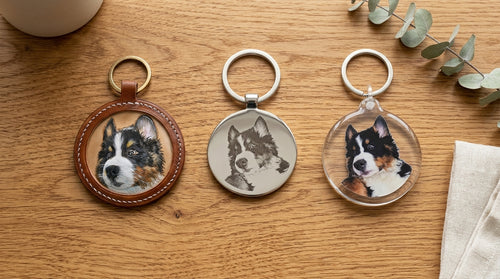
The phrase covers five very different products that happen to share a shopping-aisle. Before you compare prices, know which one you’re looking at.
1. Printed acrylic
Your photo, printed onto clear or white acrylic, laser-cut into a pet shape, keyring attached. Thickness 2–5 mm. Price: $8–$25. Production: 1–3 days. Pros: cheap, fast, vivid color. Cons: the "portrait" is literally your photo flattened onto plastic, not interpreted. Fades in sunlight within 6–18 months for most brands. No tactile craftsmanship.
2. UV-printed or dye-sub metal
Usually aluminum, sometimes steel, with your image UV-printed or dye-sublimated onto the surface. Price: $10–$30. Pros: more durable than acrylic, doesn’t crack. Cons: the printed image will still fade; the "portrait" quality depends entirely on your source photo; feels mass-produced.
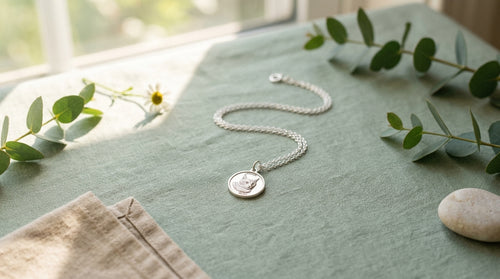
3. Stamped / laser-engraved metal tag
Not really a portrait. A silhouette or outline of your pet (from your photo, converted to a line drawing) engraved on brass, steel, or silver. Price: $20–$80. Pros: permanent, no fade, wearable for years. Cons: no detail — you lose fur, color, and the specific face.
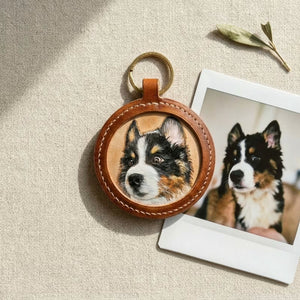
4. Hand-carved leather portrait
The category Furfond makes. Full-grain vegetable-tanned leather is cut, tooled, and hand-carved into a three-dimensional portrait of your pet, then hand-painted with archival leather dyes. Price: $150–$300. Production: 2–3 weeks. Pros: actually handmade, ages with patina, distinctive, survives daily carry. Cons: more expensive; not instant.
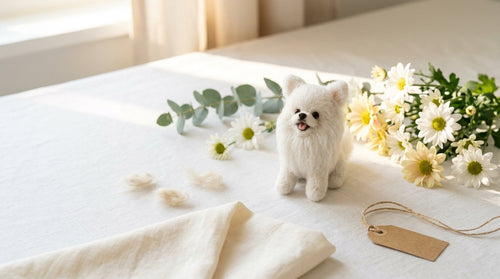
5. Cast resin or cast metal 3D portrait
A sculptor (or, increasingly, a 3D-scanner) creates a miniature sculpture of your pet and casts it in resin, bronze, or pewter. Price: $120–$350. Production: 3–6 weeks. Pros: permanent, dimensional, heirloom. Cons: long lead time; heavier than leather; often feels "figurine" rather than "portrait."
Once you know which of those five you’re shopping for, the $8-to-$300 price spread suddenly makes sense. You’re not looking at the same product at different prices. You’re looking at five different products that happen to attach to keys.

What you should pay (and why)
Rough honest pricing, based on what’s actually defensible in the market right now:
- Printed acrylic: $12–$18 is fair. Anything over $25 is overpriced unless it comes with a meaningful extra (engraved name plate, gift box, etc.).
- UV-printed metal: $20–$35.
- Laser-engraved tag (line art): $25–$60 depending on metal.
- Hand-carved leather: $150–$250. Under $100 on Etsy for a "handmade leather portrait" almost always means either printed-on-leather or a pre-made silhouette with your pet’s name stamped on it. Not the same thing.
- Cast 3D miniature: $120–$350.
If you see a listing priced dramatically below these ranges claiming the same craftsmanship, assume it’s not. The hours of labor in genuinely handmade work don’t compress no matter what a dropshipper’s marketing says.
The 6 mistakes first-time buyers make
Mistake 1: Judging by thumbnail
All custom pet keychain listings look roughly the same in a grid of 200-pixel thumbnails. Click into a product and look for: (a) real lifestyle shots (on keys, in a hand, not just on a white background), (b) the brand’s answer to "what material is this exactly?", and (c) multiple angles of the same finished piece so you can see thickness, edge finishing, and depth.
Mistake 2: Ignoring the source photo requirements
The quality of your final keychain is bounded by the quality of the reference photos you upload. A portrait artist cannot invent detail that isn’t in the photo. If a seller accepts any photo with no guidance, that’s a red flag, not a feature. Good sellers tell you exactly what to send. (Short version: 3–5 photos, front-facing, natural daylight, close-up of the face in at least one.)
Mistake 3: Not reading the production timeline
"Ships in 1–3 business days" on a custom-from-photo product is a warning sign. Anything genuinely handcrafted takes weeks. If a seller promises 48-hour turnaround on a "hand-painted" portrait, you’re buying a print.
Mistake 4: Missing the preview clause
Look for a seller who sends you a photo of the finished piece before shipping, and will make adjustments if it doesn’t look right. That "preview & approve" step is the difference between "I love it" and "I paid $200 for something I can’t use." Our studio includes one free revision in every keychain; many higher-end studios do too. Cheap sellers don’t.
Mistake 5: Buying the wrong format for the occasion
If the keychain is for someone’s daily-carry use and their pet is alive and thriving, a vivid, high-contrast portrait works beautifully. If it’s a memorial gift for someone whose pet just passed, a quieter, more muted piece is often easier to live with. Tell the artist your intent — a good one will subtly adjust.
Mistake 6: Underestimating durability on a daily-carry object
Keys live in pockets with other keys, coins, phones, and the occasional set of nail clippers. A keychain made of thin printed plastic won’t last a year. Leather, metal, and cast resin will. If you’re spending over $50, get something whose wear is a feature — leather that develops patina, metal that polishes — not a print that scratches into illegibility.
Memorial keychain vs. "fun" keychain: why intent matters
Roughly half of the custom pet keychains we make are memorial pieces — commissioned for pet parents whose dog or cat has passed. The other half are for living pets. Same product, different emotional weight.
Memorial keychain buyers tend to want: neutral tones, muted palette, quiet carry (not a piece that starts conversations), leather or metal over plastic, and something small enough to keep in a palm. "Gift for a living pet" buyers are the opposite — they want the piece to pop, to get asked about, to look exactly like the pet staring back from the couch.
If you’re the one buying, you probably already know which side of that line you’re on. If you’re choosing for someone else and you don’t know, a leather keychain in natural tan is the most universally appropriate — works for living and memorial, living and lively, quiet and loud.
What makes a pet keychain last 10+ years
- Material: Full-grain leather, sterling silver, or cast bronze will outlast every other option. Printed surfaces won’t.
- Edge finishing: On leather, look for burnished or painted edges, not raw cuts. Burnished edges don’t fray.
- Hardware: Solid metal split rings and swivels. Cheap hardware breaks at the keyring, which is where a keychain always fails first.
- Finishing seal: On painted leather, look for a matte or semi-matte sealant. Unsealed paint will wear off with pocket friction.
- Signature: Genuinely handmade pieces are often signed or stamped by the artisan. It’s not required, but it’s a good signal.
If you want a keychain your grandchildren could inherit, those five details are the shortlist.
How our keychain is made
Since we’re publishing a buying guide from our own studio, full disclosure on what we do — in case you want to compare it to other sellers’ processes.
We use full-grain vegetable-tanned leather sourced from a mid-size Italian tannery that still uses traditional bark-tanning. The portrait is carved by hand using leather-working swivel knives and modeling tools; an average keychain takes 8–12 hours of pure handwork. The painting is done in layers with archival leather dyes (not acrylic paint on the surface), then sealed with matte finish. Every piece is signed on the back by the artisan who made it. We send a photo of the finished piece for your approval before shipping — and we include one free revision if anything needs adjusting.
Price: $229. Production: 2–3 weeks. Ships worldwide. See the product page here — materials, sample photos, FAQ.
If you’re still deciding
A fast decision tree:
- Need it in 3 days, budget under $25? → Printed acrylic. Just know what you’re getting.
- Need something permanent, daily-carry, under $80? → Laser-engraved metal tag with name + silhouette.
- Want an actual portrait, intend to keep it for a decade, $150–$250 budget? → Hand-carved leather. (That’s us — keychain page.)
- Want a heirloom-grade sculpture, budget $200–$350, can wait 4–6 weeks? → Cast metal or resin 3D miniature from a specialist sculptor.
Whatever you land on, remember the core rules: read the materials carefully, insist on a preview step, send the best photos you have, and match the piece to the emotional occasion. A pet keychain is a small object you’ll hold thousands of times over a decade. It’s worth getting right.
If you want to see what our leather keychains look like up close, the full product page is here. And if you have questions before ordering, we answer every email ourselves — no form-bots.
Frequently Asked Questions
How long does it take to make a custom pet keychain from a photo?
For a hand-carved leather piece (the kind we make at Furfond), expect 2–3 weeks for crafting plus 5–14 days for shipping — so roughly 3–5 weeks door to door. Mass-produced acrylic printed keychains can ship in 3–7 days. The gap reflects the difference in process: one is printed by a machine, the other is carved by a person studying your pet's photos.
How much does a custom pet keychain from a photo cost?
Prices vary widely by material and process: printed acrylic runs $15–35, laser-engraved metal $35–80, and hand-carved leather portrait pieces $80–250. Furfond's leather keychains start at $79. Generally, the more a maker charges, the more time a human artisan is spending on your specific pet — and that's what creates a genuine portrait rather than a silhouette.
What photos do I need for a custom pet keychain?
Send 3–5 clear, well-lit photos. Prioritize: (1) a front-facing portrait in natural daylight that shows the eyes clearly, (2) a shot that shows fur texture and any distinctive markings, and (3) a profile shot if your pet has an unusual head shape. Avoid dark, blurry, or heavily filtered photos — they make the artisan's job harder and the result less accurate.
Can you make a custom keychain of a pet who has passed away?
Yes, and this is one of the most common reasons people order. Old photos — even scanned printed photos from years ago — work as long as the fur color and markings are visible. A pet portrait keychain is one of the most practical memorial objects: it travels with you every day, rather than sitting on a shelf.
What is the best material for a custom pet keychain that will last?
Full-grain vegetable-tanned leather lasts the longest and ages the most gracefully — it develops a patina over years of daily use. Stainless steel is a close second for pure durability. Acrylic is the most affordable but the most fragile; expect 3–7 years before scratching becomes noticeable. If you're ordering a once-in-a-lifetime piece (memorial, anniversary), invest in leather or metal.