How to Help Your Surviving Pet Grieve After Losing a Companion
How to Help Your Surviving Pet Grieve After Losing a Companion
When a beloved pet passes, the heartache ripples through everyone in the home — including the four-legged family member who stayed behind. The dog who used to share a water bowl. The cat who slept curled against a now-empty spot on the couch. We at Furfond have heard from countless families that surviving pet grief caught them off guard in the weeks following a loss, and that not knowing how to help made the heartbreak heavier.
The good news is that pets are remarkably resilient when they feel safe, loved, and seen. Understanding surviving pet grief — and gently easing your companion through the transition — makes an enormous difference in their healing. This guide covers the behavioral signs to watch for, practical ways to comfort a grieving pet, and ideas for honoring your departed companion as a family.
Do Pets Really Grieve?
Yes — and behavioral research confirms what pet parents have always known. Dogs, cats, rabbits, parrots, and other social animals form deep attachments, and the loss of a bonded friend can trigger genuine mourning. A 2022 study in Scientific Reports followed hundreds of dogs after the loss of a canine housemate and found that most showed measurable changes in eating, sleeping, playing, and attention-seeking for weeks afterward.
Your pet may not understand death the way humans do, but they absolutely understand absence. They know their friend is missing from the bed, the door, the bowl, the morning walk. That awareness can manifest as confusion, restlessness, or a quiet withdrawn sadness that looks familiar to anyone who has grieved themselves.
8 Common Signs of Surviving Pet Grief
Every animal grieves a little differently, but these are the most common signs families notice in the days and weeks after a companion's passing:
- Loss of appetite — eating less, picking at food, or skipping meals
- Changes in sleep — sleeping more than usual, or restless pacing at night
- Searching behavior — wandering the house, sniffing favorite spots, looking out windows for the missing companion
- Vocalizing more — whining, howling, or meowing at unusual times
- Withdrawal or clinginess — either retreating to a quiet corner, or shadowing you everywhere
- Anxiety around routines — reluctance to walk without their friend, hesitation at the door
- Regression — house-training accidents, destructive chewing, or behaviors you thought were long behind them
- Lethargy or subtle physical signs — dimmed energy, overgrooming, weight loss, dull coat
Most signs are normal and temporary, easing within two to six weeks, though some pets may grieve for several months. If your pet stops eating for more than 24 hours, shows dehydration, or seems physically unwell, contact your vet — grief can mask medical issues.
6 Gentle Ways to Comfort a Grieving Pet
You don't need elaborate interventions to support a grieving companion. The simplest, most consistent acts of care are usually the most healing.
1. Keep their routine as steady as possible. Feed, walk, and play at the same times you always did. Predictability is comfort. Your pet draws enormous reassurance from knowing the rhythm of the day hasn't disappeared along with their friend.
2. Offer extra physical closeness. Sit on the floor with them. Brush their coat. Let them sleep nearby. Quiet companionship often communicates more than any well-meaning fuss.
3. Don't rush to "fix" the empty space. Resist the urge to immediately rearrange furniture, pack away beds, or adopt a new pet. Give your surviving companion time to process the absence in a familiar environment before introducing change.
4. Reintroduce play and enrichment gently. Offer short, low-pressure play sessions — a slow tug, a treat puzzle, a snuffle mat, a new walking route. Follow their lead. Tiny wins rebuild momentum and gently re-engage a grieving brain.
5. Keep something familiar that smells of their friend. A blanket, a favorite toy, or an unwashed bed can be deeply soothing in the first weeks. Some pets sleep on these items for months — that's healthy.
6. Be patient with regressions. If your pet has an accident or refuses a walk, meet them with kindness rather than correction. They're not being defiant — they're processing.
Creating a Shared Memorial Space at Home
One of the most quietly powerful things you can do for both yourself and your surviving pet is to create a small memorial space at home — a place where the departed companion is honored as part of the family. Many families tell us their dog visits the spot, their cat sleeps near it. Animals seem to sense that this corner of the home still holds love, which can ease surviving pet grief in subtle, lasting ways.
A memorial corner doesn't need to be elaborate. A small low shelf, a side table, even a sunny windowsill works beautifully. Start with one or two pieces:
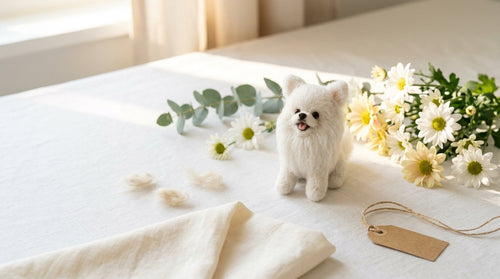
- A handmade custom pet portrait frame — our hand-sculpted wool felt portraits capture your pet's likeness in a way flat photos rarely manage. Many families place the frame at their surviving pet's eye level, so the bonded companion is part of the daily landscape.
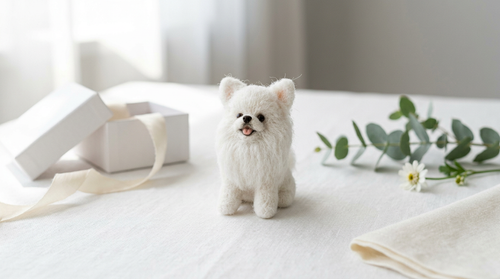
- A custom pet plush — surprisingly comforting. We've heard from owners whose dog adopted a wool-felt plush of their departed friend as a "buddy," carrying it gently from room to room.
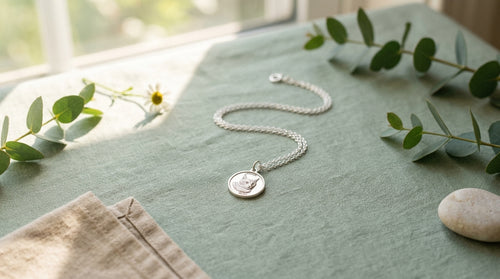
- A custom pet necklace worn by the human family — a tangible way for you to feel your companion close while you support the surviving pet's healing.
- A small candle, a sprig of dried herbs, your pet's favorite toy, or a printed photo — simple sensory anchors of memory.
Browse our complete collection of pet memorial gifts for more handmade options.
When to Seek Professional Support
Most pets work through grief on their own with steady love and gentle routine. But contact your veterinarian or a certified animal behaviorist if you notice any of the following: refusal to eat or drink for more than 24 hours; signs of physical illness; self-soothing behaviors that become destructive (overgrooming causing hot spots, compulsive pacing, severe separation anxiety); grief symptoms that intensify rather than ease after 8 weeks; or aggression and fearfulness that didn't exist before the loss. Asking for help isn't a failure — it's exactly the kind of attentive love that gets a grieving animal back to themselves.
Frequently Asked Questions
How long does surviving pet grief last?
Most pets show the strongest symptoms in the first two to six weeks, with gradual improvement over two to six months. Bonded pairs that lived together for many years may grieve longer. If symptoms intensify rather than ease, consult your vet.
Should I let my pet see the body of their companion?
Many behaviorists believe gently allowing a surviving pet to see, smell, and spend a few quiet minutes with their departed friend's body can reduce searching behavior and confusion. Trust your instincts and your vet's guidance.
Will my pet feel better if I get another animal right away?
Not usually. Most pets benefit from a period of stable, predictable life with just their humans before a new companion is introduced. Rushing the timeline can amplify anxiety in an already grieving animal. Watch for steady appetite, returning playfulness, and easy engagement with new people before considering an introduction.
Is it okay to talk to my pet about their friend?
Absolutely. Pets respond to tone, presence, and the cadence of your voice more than to the words themselves. Speaking softly about the companion they've lost — using familiar names, telling old stories — can be a soothing daily ritual for both of you.
How can I keep my pet's memory alive for our surviving companion?
Keep a familiar scented item accessible for the first months. Place a memorial keepsake — a portrait frame, a wool felt plush — somewhere your surviving pet visits often. Mention the departed companion's name in your daily routines.
My pet seems totally fine — should I be worried?
Not necessarily. Some pets process loss quietly, especially if their relationship with the departed companion was friendly but not deeply bonded. As long as eating, sleeping, and engagement remain normal, a calm response is just as healthy as visible mourning.
Walking Through This Together
Watching surviving pet grief unfold is one of the most tender experiences a family can share. There's something deeply moving about offering comfort to a small companion who is feeling, in their own way, exactly what you are feeling. Healing happens slowly, in the small daily acts of presence — the morning walk, the brushed coat, the shared blanket on the couch. And one day, you'll notice your surviving pet curled peacefully near the framed portrait of their friend, breathing softly, at home with the memory.
If you're looking for a meaningful way to honor a beloved companion as your family heals together, explore our handmade pet memorial gifts. Every Furfond keepsake is hand-sculpted with care, designed to live in the warm everyday corners of your home where memory and love continue, side by side.