How to Create a Pet Memory Box: A Heartfelt Guide to Holding Onto Their Story
How to Create a Pet Memory Box: A Heartfelt Guide to Holding Onto Their Story
In the days and weeks after losing a beloved pet, grief can feel like a tide that won't quite go out. You wash their food bowl one last time. You find a tuft of fur under the couch. You hold their collar and don't know where to put it. So many small, sacred objects — and no obvious place for them to go.
A pet memory box is a quiet, gentle answer to that question. It's a single, safe place where the most meaningful pieces of your pet's life can live together — not hidden away, not constantly underfoot, but held close, ready to be opened on the days you want to remember. We at Furfond have helped many families build theirs, and we've learned that creating a pet memory box is often one of the most healing rituals of early grief.
Why a Pet Memory Box Helps With Grief
Grief counselors often talk about "continuing bonds" — the idea that healthy grief doesn't mean letting go of someone, but rather finding new ways to carry them with you. A memory box is one of the simplest, most tangible ways to do exactly that.
When everything reminds you of your pet, gathering their things into one intentional place gives that love a destination. You're not "moving on" or packing them away — you're giving the relationship a home it can rest in. Many families find the act of building the box becomes its own quiet ceremony, a way to share memories without needing to find the right words.
What to Put Inside Your Pet's Memory Box
There are no rules here, only invitations. What matters is that each object means something to you. That said, after years of helping pet parents through this process, we've found a few categories tend to feel especially comforting to include.
Things they actually wore or used:
- Their collar, harness, or favorite leash
- Their ID tag (consider sealing it in a small organza or linen pouch)
- A small, well-loved toy — the one they always carried around
- A folded square of their favorite blanket
- A clipping of fur, ideally placed inside a small glass vial or a folded scrap of soft cloth
Things that captured who they were:
- Printed photographs (not just digital — physical prints feel different in your hands)
- Vet records, adoption paperwork, or the receipt from the day you brought them home
- A pawprint, ink or clay — many veterinary clinics will help you make one
- A short handwritten letter to them, sealed in an envelope
Handmade keepsakes you commission afterward:
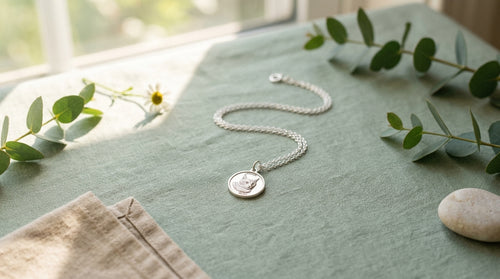
- A custom pet necklace with their portrait hand-engraved on sterling silver — worn close, or rested inside the box on quiet days
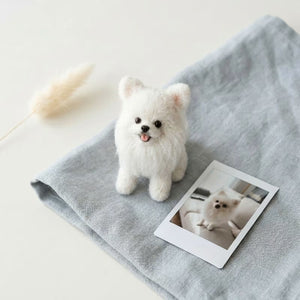
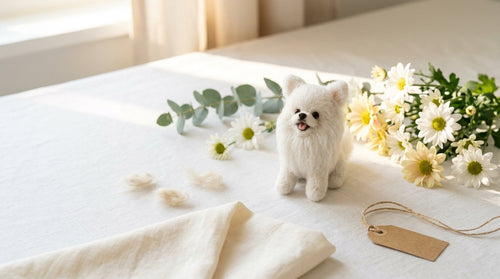
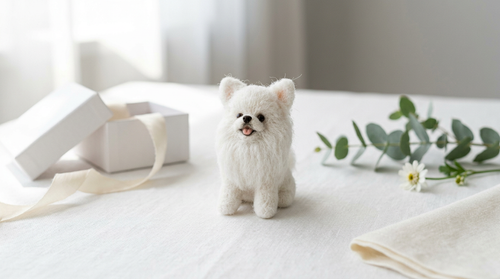
- A small custom pet plush sculpted in wool felt to look like them, soft enough to hold
- A custom pet portrait frame — a hand-sculpted wool felt likeness in a wooden shadow box, which can sit on top of the box or live inside it for the first year
You don't need everything on this list. A single photograph and a folded blanket are enough if that's what feels right. The box belongs to your grief, not to anyone else's idea of what it should hold.
Choosing the Right Box
The container matters more than people expect. The box you choose will become part of how you remember your pet — you'll see it on a shelf, tuck it under a bed, lift it down on hard days. It's worth picking something that genuinely feels right.
A few gentle guidelines we share with our customers:
- Natural materials age better. Linen-covered, raw wood, or hand-finished cardboard boxes develop a soft patina that plastic and laminate never will. Twenty years from now, a wooden box still feels like an heirloom.
- A little bigger than you think. Most people underestimate how many small items they'll want to add over the months. A box roughly the size of a hardcover book is a good starting point for one pet.
- Sturdy hinges, soft lining. You'll open this box many times over the years. A real hinge (not a tucked lid) and a soft fabric lining protect what's inside and make every opening feel intentional.
- Neutral colors travel through life with you. Cream, natural linen, raw wood, soft gray — these tones blend into any home you live in, any room you eventually place them in.
If you want to go a step further, some families add a small engraved nameplate to the lid. A simple "Bella · 2011–2026" is enough. You don't need anything more.
Building the Box Together — A Gentle Approach
Give yourself permission to do this slowly. The box often becomes richer when it's built across many quiet afternoons rather than one tearful sitting.
Start with the container. A simple, well-made box you can live with is better than one you wait months to perfect.
Gather the obvious things first — the collar, a favorite toy, a few printed photos. Place them inside, no arrangement needed.
Sit with it open one evening. Add what you find yourself reaching for; remove anything that feels wrong. Trust your hands more than your head.
Add the rest over weeks — the handwritten letter, the pressed flower, the keepsake you commissioned. Each addition is its own small ritual.
Where to Keep the Box (and When to Open It)
The instinct for many grieving pet parents is to tuck the memory box deep in a closet, where they won't have to see it. We gently suggest the opposite: keep it somewhere visible but not central. A shelf in the living room, a console in the hallway, the top of a dresser in your bedroom. Somewhere your eyes can rest on it without bracing for impact.
As for when to open it — there's no schedule. Some families open theirs on their pet's birthday and the anniversary of their passing. Others open it on holidays. Some open it any quiet evening when grief comes back. The point isn't ritual for ritual's sake; it's having a way to revisit your pet that feels chosen, not accidental.
If you're putting together a memory box as a gift for a grieving friend, our collection of pet memorial gifts can be a thoughtful starting point — paired with a few printed photos and a handwritten note, even a single beautiful keepsake can become the heart of a box they build the rest of over time.
Frequently Asked Questions
How long should I wait after my pet passes before making a memory box?
There's no "right" time. Some people find it comforting to begin in the first days; others need months before they can touch their pet's things. Both are normal. The only wrong time is when it feels forced.
Should I include my pet's ashes in the memory box?
Most families keep ashes separately, in a dedicated urn placed somewhere meaningful. The memory box is more for the objects of their daily life — though a small portion of ashes in a sealed pendant or vial is something some families do choose to include. Follow your instinct.
Can children help create the memory box?
Yes, and it's often deeply meaningful for them. Building the box together gives children a concrete way to participate in grief, which can otherwise feel abstract and frightening. Let them choose at least one thing to include — a drawing, a toy, a written note.
Is it strange to add new items years later?
Not at all. Many people add things across decades — a new photograph rediscovered in an old phone, a poem written on a tenth anniversary, a commissioned keepsake made years after the loss. A memory box is a living object.
What if I have more than one pet I want to remember?
Either a larger box with labeled compartments, or one box per pet, both work beautifully. We've seen both. The shared box can feel like a family album; individual boxes honor each pet's distinct personality. There's no wrong answer.
I don't have many of my pet's physical belongings — is a memory box still meaningful?
Absolutely. A box with one photograph, one handwritten letter, and a single commissioned keepsake is just as meaningful as one packed full. Quantity isn't the point. Attention is.
A Place for Their Story to Live
In the end, a pet memory box is less about the objects than about the gesture. It's a way of saying: this life mattered, and I am building it a home that lasts. The collar, the photograph, the small wool felt likeness, the handwritten letter — together they tell a story too big for any one drawer or shelf.
At Furfond, we craft every pet memorial keepsake by hand because we believe handcraft carries something machine-made can't: the time, attention, and care that grief deserves. If you're building your pet's memory box and looking for a keepsake to live inside it, we'd be honored to make something for you.