Children and Pet Loss: A Gentle Guide to Helping Kids Grieve a Family Pet
Children and Pet Loss: A Gentle Guide to Helping Kids Grieve a Family Pet
For many children, the family pet is a first best friend — the one who waits at the door after school, who sleeps at the foot of the bed, who never tires of the same game played a hundred times. So when that pet is gone, the loss your child carries is rarely small. It is often their first encounter with grief, and the way you walk through it together will shape how they understand love and loss for years to come.
If you are reading this, you are likely searching for the right words, the right pace, the right way to help a heartbroken child without rushing them or making it worse. We at Furfond have spent years crafting handmade memorial keepsakes for families navigating exactly this kind of loss, and many of those families are walking through it with little ones at their side. Here is what we have learned about helping children with pet loss — patiently, gently, in language they can hold.
Why Children Grieve Differently Than Adults
Children do not grieve in straight lines. An adult might cry for days, then slowly return to routine. A child might be sobbing one minute and asking for a snack the next — not because they have moved on, but because grief is too big for a small body to hold all at once. They take it in waves, in pieces, often returning to the same questions weeks or months later as their understanding deepens.
Their grief also shifts with age. A four-year-old may not yet understand that death is permanent and might ask repeatedly when the pet is coming home. A seven-year-old may begin to grasp permanence but worry whether it was their fault. A pre-teen may grieve more like an adult but feel embarrassed to cry, especially around peers. None of these reactions are wrong. They are simply where your child is in their understanding of the world — and your job is not to fix the grief, but to walk beside it.
The most important thing to remember: a child who is allowed to grieve openly, with honest answers and steady comfort, learns that loss is survivable. A child whose grief is brushed aside often carries that unfinished feeling into the next loss, and the next.
How to Talk to a Child About a Pet's Death
The hardest moment, for most parents, is the first conversation. Here are the principles that help most.
Use real words, gently. "Passed away," "went to sleep," and "we lost her" can confuse a young child or, worse, make them afraid of bedtime or fear that you might be "lost" too. As gently as you can, use the actual words: died, death. Pair them with reassurance: "Buddy died this morning. His body was very old and very tired, and it stopped working. He was not afraid, and he was not in pain. He is not coming back, but the love we have for him stays with us."
Be honest about what happened — at their level. If the pet was put to sleep, you can explain that the vet helped the pet's body stop hurting. If the loss was sudden, you can say so. Children sense when adults are hiding something, and the imagination they fill in is almost always worse than the truth told kindly.
Let them ask the same question many times. "Where is she now?" "Will I die too?" "Did she know I loved her?" — children process by repeating. Each time you answer the same question with the same calm honesty, you teach them that grief is something the family can hold together.
Give them permission to feel anything — or nothing. Some children cry immediately. Others stay quiet for days, then break down at a small thing weeks later. Some get angry. Some keep playing as if nothing happened. Tell them: "Whatever you are feeling is okay. There is no right way to miss someone you love."
Helping a Child Process Through Memory and Ritual
Children often need something to do with their grief — somewhere to put the love that has nowhere left to go. Small rituals and creative acts give a child's body a way to express what their words cannot yet hold. A few that families have shared with us over the years:
- A goodbye drawing or letter. Even a child who cannot yet write can dictate a message to the pet, or draw a picture of their favorite memory together. Many families tuck the drawing into a small keepsake box or a memorial corner.
- A memory jar. Keep a jar on a shelf where every family member — including the child — can drop in a written or drawn memory whenever one comes to mind. On hard days, you read them together.
- A goodbye ceremony. Even a tiny one. A few flowers from the garden, a short walk to the pet's favorite spot, a moment of saying out loud what you loved most. Children find enormous comfort in marking the moment formally.
- Planting something living. A small herb pot, a sapling in the yard, a pot of forget-me-nots — anything that will continue to grow as a quiet memorial. Watering it becomes a small ritual a child can do on their own.
- Looking at photos together, on purpose. Set aside time, not in passing. Pull up the videos. Tell the stories. Let yourself laugh — children learn from this that remembering can be a happy thing too.
One of the most healing things a family can do is normalize speaking the pet's name. Many families fall into a kind of cautious silence after a loss, afraid of upsetting the child. But avoiding the name can teach a child that love and loss are too dangerous to talk about. Instead, mention the pet often. Tell stories. Laugh at the funny ones. Let the pet stay part of the family conversation.
When a Memorial Keepsake Helps a Child Heal
For many children, a tangible keepsake — something they can hold, see, and touch — anchors a feeling that is otherwise hard to grasp. A photograph on the wall is meaningful, but a child often needs something more sensory: something soft, something present, something that meets their hands the way the pet once did.
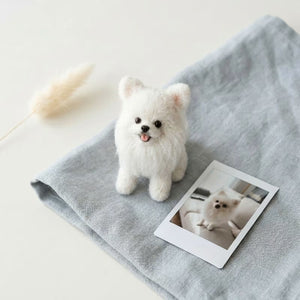
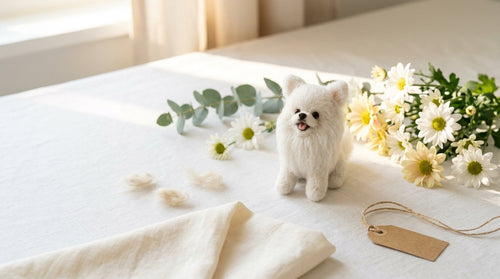
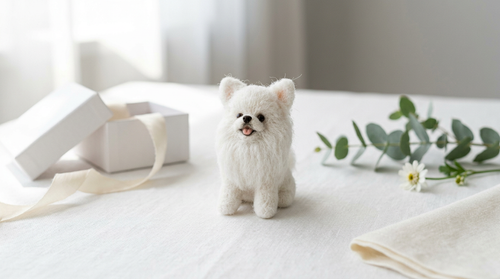
A handcrafted custom pet plush is the keepsake we hear about most often from families with young children. Sculpted by hand from raw wool felt to look like the actual pet — same coloring, same proportions, same expression — it gives a child a quiet companion they can keep on their bed, carry into the car for hard days, or simply hug when the missing feels too big. It is not a replacement, and a thoughtful child will know that. But it is something soft to hold when the bed feels too empty, and that matters.
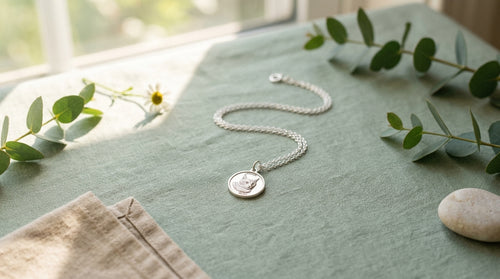
For older children, a small piece they can wear is often more comforting. A delicate custom pet necklace, hand-engraved in sterling silver with the pet's portrait, gives a pre-teen or teen a private way to carry the pet with them — into school hallways, onto the bus, into the parts of life where their grief might otherwise feel invisible. We have heard from families whose teen quietly tucks the pendant under a school shirt and touches it through hard moments. A tiny, steady comfort.
For families who want to display the pet's likeness in a shared space — a hallway, a child's room, a memorial corner — a custom pet portrait frame in needle-felted wool gives the whole household a place to land their gaze. Children often sit in front of it and talk to the pet, the way they once did at dinnertime. That, too, is healing.
If you are uncertain which keepsake fits your child, our full collection of pet memorial gifts walks you through the options by age, sensory preference, and how the child tends to express their feelings.
Caring for Yourself While Caring for Your Child
One last note, parent to parent: you are also grieving. The pet was yours too, and the work of holding a child through their loss while carrying your own is a quiet kind of heavy. Children do not need a parent who is invulnerable. They need a parent who shows them that grief can be felt, named, and survived. If you cry when they ask about the pet, that is not failing them — that is teaching them.
Find your own small ritual. Wear the necklace yourself. Set the plush on a shelf you walk past in the morning. Speak the pet's name out loud sometimes. The same gentleness you give your child, give yourself.
Frequently Asked Questions
Should I let my child see the pet's body to say goodbye?
For many children, yes — but only if they want to and only after you have prepared them gently for what they will see. Seeing the body can help a young child understand that the pet is truly gone in a way that words alone cannot. Never force it; offer the choice and let the child decide.
Should we get a new pet right away to help our child move on?
Most grief specialists advise against rushing into a new pet. A child needs time to grieve the one they lost before being asked to bond with a new one, and a new pet introduced too quickly can feel like a replacement rather than a fresh relationship. Wait until your child is the one asking — that is usually the right signal.
My child has not cried at all. Should I be worried?
Not necessarily. Many children grieve in delayed waves, especially if the loss feels too big to face directly. Keep the door open with gentle invitations — "I was thinking about Buddy today, do you ever think about him?" — and trust that the tears will come when your child is ready.
How do I explain euthanasia to a child?
Use simple, honest words tailored to their age. For a young child: "The vet helped Buddy's body stop hurting, because he was so sick that nothing could make him better. It was the kindest thing we could do for him." Avoid the phrase "put to sleep" with younger children, as it can frighten them at bedtime.
Is it okay to memorialize the pet in my child's room?
Yes — as long as your child wants it there. Some children find a memorial corner deeply comforting; others need their bedroom to feel like a grief-free space. Ask, and follow their lead. The memorial can always move later.
How long does grief last for a child?
There is no fixed timeline. Most children move through the most intense grief over weeks or a few months, but waves return — at birthdays, anniversaries, or when something small triggers the memory. This is normal and healthy. Grief that is welcomed becomes love that is carried forward.
My older teen says they are "fine" but seems quieter. What can I do?
Teenagers often grieve privately and resist being asked directly. Offer presence rather than pressure: a meal together, a drive, a walk. Sometimes a small wearable keepsake — like an engraved pendant they can keep close — gives a teen a private way to grieve without having to talk about it.
Should I include my child in the goodbye ceremony or memorial?
If they want to be included, absolutely yes. Even very young children benefit from being part of the family ritual — it teaches them that grief is shared, not hidden. Give them a small role: placing a flower, drawing a picture to leave behind, choosing the pet's favorite blanket to wrap them in.
You Are Not Walking This Alone
If your family is moving through pet loss with a child at your side, please know that what you are doing — the patience, the honest words, the small rituals — is the exact work of love. There is no perfect way to do this. There is only doing it together, kindly, at the pace your child needs.
If a handcrafted memorial would help your child carry the love forward, we would be honored to make one for your family. Every Furfond keepsake is hand-shaped from a photograph by an artist who understands how much that photograph means. Browse our pet memorial gifts when you are ready, and write to us if you would like guidance on which piece might be right for your child.
Whatever you choose, your pet was deeply loved. Your child knows that. And the love you are teaching them, in the way you walk through this loss together, will outlast everything.